
News
Heavy Truck Demand and Road Conditions in Africa, the Middle East and South America
A truck that runs 100,000 km on asphalt without trouble is not necessarily a truck that will hold up on Lagos's rainy-season dirt roads, in Riyadh's fifty-degree heat, or on the steep high-altitude grades of the Andes at 4,000 m. The truck is not at fault; the fault lies in a configuration that does not match local conditions.
We are an authorized first-tier Sinotruk dealer with long experience in complete-vehicle export. Sinotruk is one of China's main heavy-truck export brands, and HOWO series trucks are in service in large numbers in Africa, the Middle East and South America. Local technicians know their structure and spare parts are relatively easy to find—a point that often weighs heavier in overseas operation than the specification sheet. Below we set out the local road conditions, vehicle requirements and configuration priorities for the three regions, and explain why Sinotruk models suit these markets.
1. Common ground and fundamental differences
Start with the similarities. Heavy truck users in these three regions share several strongly similar characteristics: heavy loads and even overloading are the norm; repair networks are incomplete and the equipment and skills of local workshops vary widely; parts procurement takes a long time—one item from China to site is often measured in weeks; and the truck is frequently the cash-flow lifeline of a family or a whole company, so uptime matters far more than comfort.
The differences trace back to the road spectrum and the climate. Africa has the most mixed roads of the three—from asphalt trunk routes to dirt roads washed out in the rainy season and gravel haul roads at mines. The Middle East has good roads but an extreme environment—motorway networks are complete, yet heat persists for months. South America has the harshest altitude and gradients—a single route can climb from sea level to 4,000 m. These three factors produce completely different configuration priorities.
Table 1 Core conditions compared across the three markets
| Comparison | Africa | Middle East | South America |
|---|---|---|---|
| Typical road conditions | Asphalt trunk roads, dirt roads in the rainy season and gravel mine roads all coexist | Mainly urban and trunk motorways, with desert gravel sections | Coastal motorways to high-altitude gravel roads, steep grades and tight bends |
| Main challenges | Mixed road conditions, overloading, long parts lead times | Sustained high temperatures, long-distance motorway running, sand and dust | High-altitude oxygen shortage, continuous climbs, dust |
| Steering | RHD in East and Southern Africa; mostly LHD in West Africa | Mainly LHD | LHD throughout |
| Mainstream models | 6×4 and 8×4 dump trucks, tractor units, fuel and water tankers | Durable dump trucks, long-haul tractor units | Mining dump trucks, tractor units, heavy and oversize haulage |
| Emission threshold | Euro IV and above in West Africa; EAC Euro IV | Higher stages enforced, e.g. Saudi Arabia at roughly Euro V level | Depends on the destination country; stricter in Chile and Peru |
| Top configuration priority | Structural strength and wear resistance | Cooling and thermal load | Power and braking |
Note: steering configuration, emission thresholds and mainstream models are regional generalities; regulations and market preferences differ from country to country and must be checked country by country before ordering.
2. Africa: the widest road spectrum, durability first
Industry data indicate that more than 80% of freight in Africa moves by road. This means trucks carry the backbone of regional logistics, while road quality is extremely uneven.
(1) Road conditions: three surfaces on one corridor
West African coastal areas suffer seasonal flooding, and asphalt surfaces are easily washed away: dust in the dry season, mud in the wet season, and very different passability on the same stretch of road within one year. East and Southern Africa are dominated by long-haul corridors—Mombasa–Nairobi–Kampala, Dar es Salaam–Lusaka—routes that are long, with road condition varying from good to bad, and sparse fuel stations and service points. Around mines and quarries the surface is gravel and dirt, with fine dust and heavy wear.
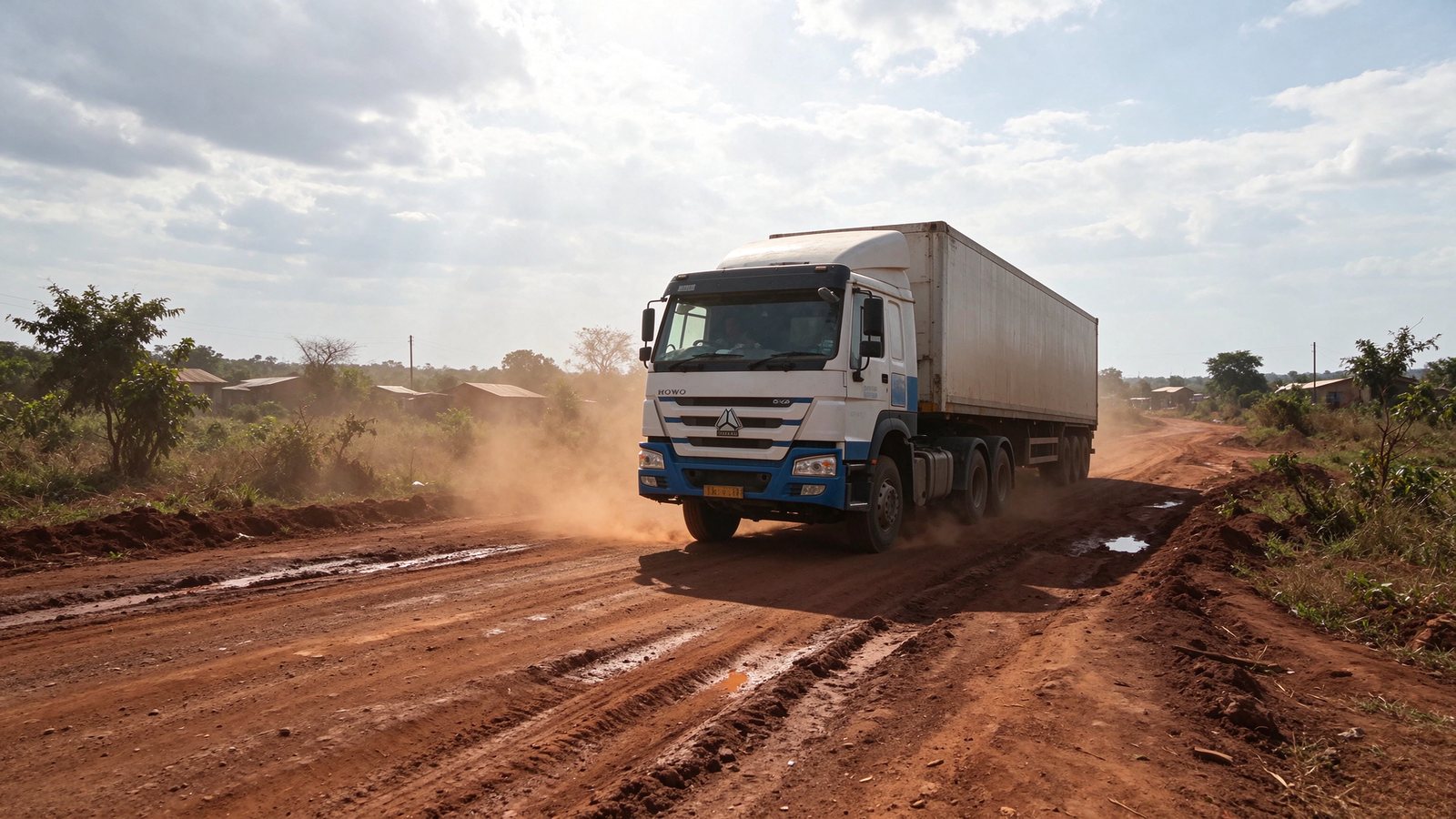
Figure 1 African red-dirt roads: ruts and potholes after the rainy season are the norm
(2) Demand profile: dump trucks first, tractor units second
Africa's demand structure tracks the stage of infrastructure construction. Road building pulls in 6×4 dump trucks, mines and quarries pull in 8×4 dump trucks, cross-border long-haul corridors pull in tractor units, and fuel and domestic water distribution pull in fuel and water tankers. That is why dump trucks normally outsell tractor units in African markets.
(3) Configuration priorities: strength, wear resistance, dust protection
First, structural strength. Overloading is common in some markets, so the frame, leaf springs, axle housings and wheel ends must all carry margin above the rated-load condition; domestic rated-load specifications cannot simply be shipped as they are.
Second, wear resistance. For mining duty we recommend a U-shaped body, which discharges more smoothly and resists impact better than a rectangular body; a high-strength steel floor significantly extends the replacement interval.
Third, dust protection. Mine-road dust is fine, so air-filter capacity must be increased and the intake system well sealed; otherwise dust entering the cylinders causes rapid bore wear.
Fourth, fording and cooling. There are many water crossings in the rainy season, so harnesses, connectors and breathers need proper water sealing; hot, humid conditions also place extra demands on cooling capacity.
(4) Two hard admission requirements
One is steering. Most countries in East and Southern Africa are RHD markets—Kenya, Tanzania, Zambia and South Africa all require RHD—and the truck should be purpose-built RHD, not simply a converted left-hand-drive vehicle: steering gear, pedals and instrument layout must all be re-engineered. Most West African countries are LHD.
Two is emissions. The fifteen ECOWAS states have adopted a vehicle directive requiring imported new and used vehicles to meet at least Euro IV, applied since 2021; the East African Community also applies Euro IV uniformly. Note too that fuel sulphur content is high in many African markets, so when choosing a truck you cannot look only at the emission number—you must check whether the aftertreatment system can tolerate local fuel quality.
For Africa, HOWO models can be supplied with reinforced frame and leaf springs, a U-shaped wear-resistant body, a high-strength steel floor, high-capacity air filtration and fording seals, and purpose-built RHD vehicles directly, with no aftermarket conversion. HOWO already has a large in-service population in several African markets, and local repair experience and parts supply are relatively mature—which often cuts downtime more than a few parameters on the specification sheet.
3. Middle East: heat plus long-distance motorway running, cooling and thermal load first
The roads in the Middle East are far better than in Africa, but the environment tests the truck on a different dimension: heat.
(1) Road conditions and climate: good roads, extreme heat
Saudi Arabia, the UAE and their neighbours have complete motorway networks, with dual multi-lane asphalt trunk routes. On the typical Riyadh–Dammam–Jubail corridor, a round trip is about 1,600 km and the truck spends long periods at motorway cruise. The real challenge is air temperature: summer temperatures stay above 38 °C, with extremes reaching 47 °C, for several months.
The knock-on effects of heat are clear: the engine cooling system runs under sustained high load, gearbox and retarder oil temperatures rise, tyre pressure and temperature climb, harnesses and hoses age faster, and cab air-conditioning load is heavy. Add fine desert sand and dust, and the cleaning interval for the intake and radiator shortens noticeably.
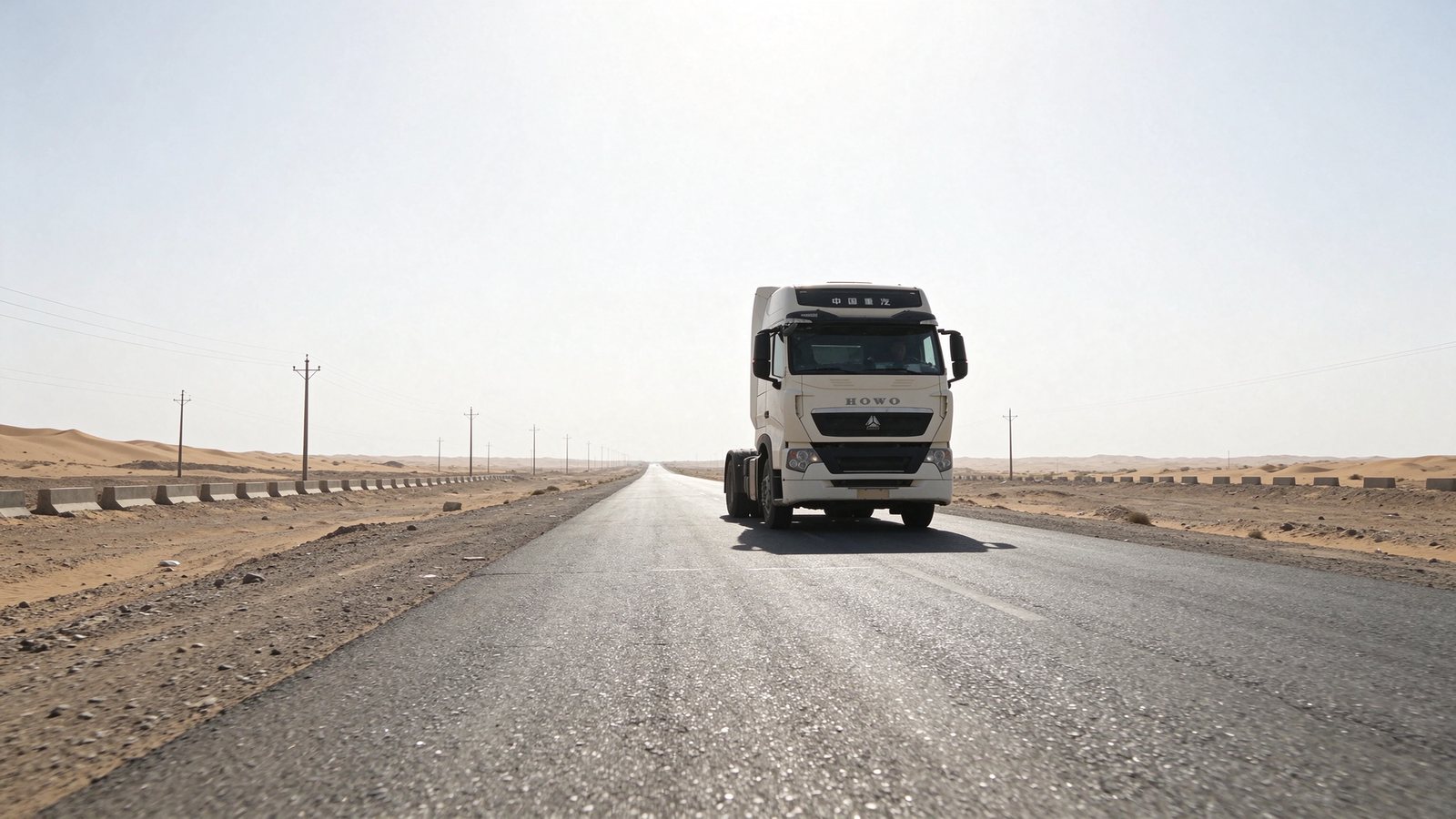
Figure 2 Middle East desert highway: long-distance motorway corridors where heat and heat haze are the main challenge
(2) Demand profile: Saudi Arabia builds, the UAE standardizes
Saudi Arabia is the largest heavy-truck market in the Gulf, with imports estimated by the industry at roughly 20,000–25,000 units a year. Driven by Vision 2030, mining expansion, road upgrades and new-city construction are advancing together, sustaining steady demand for durable dump trucks and long-haul tractor units. The UAE market leans towards standardized logistics and municipal engineering vehicles, with higher requirements for consistency, appearance and regulatory compliance.
(3) Configuration priorities: larger cooling, heat-resistant components
Cooling is the first priority. Radiator, intercooler, fan and air-guide structure must all be matched to high-temperature duty; temperate-climate specifications cannot simply be carried over. Retarders and engine brakes must be adequately specified—brake fade on long descents and in high heat is a real risk.
Heat-resistant components are equally important. Hoses, harnesses and seals should be specified in high-temperature grades; tyres should be selected for high heat and long-distance motorway duty, with attention to speed rating and heat resistance; air-conditioning capacity should be checked against local temperatures—in the Middle East this is not a comfort feature but a question of whether the driver can keep working consecutive shifts.
Dust protection must keep pace. Increase air-filter capacity, fit a sand screen or cleanable structure ahead of the radiator, and advise customers to shorten blow-down intervals.
(4) Market access
Saudi Arabia enforces the SASO certificate of conformity (CoC) for imported vehicles—it is mandatory—and its emission requirements are roughly at Euro V level; GCC customs-union import duty on commercial vehicles is about 5%. Certification documents and supply consistency are items that must be confirmed before quotation: a vehicle without the certificate cannot be cleared even after it arrives at port.
For high-temperature Middle East duty, Sinotruk models can be specified with larger radiator and intercooler, high-temperature harnesses and hoses, and sand-resistant intake structures, with hydraulic retarders and engine brakes matched as required. These are not option gimmicks; they are the baseline for keeping a truck productive through sustained heat and long-distance motorway running.
4. South America: high altitude and steep grades, power and braking first
South America's challenge is not heat but height.
(1) Road conditions: from sea level to 4,000 m
Peru's terrain pushes the problem to its limit: from the coastal highway near sea level, Andean passes rise above 4,800 m, and from Lima to the central mining region the road climbs from sea level to over 4,000 m within about 200 km. Bolivia's Andean mining areas lie at roughly 3,500–5,500 m, where oxygen concentration falls markedly, on gravel roads with steep grades and tight bends. Northern Chile is an intensive mining corridor—the Escondida and Collahuasi haul cycles, the Iquique–Antofagasta–Calama route, and lithium haulage around the Atacama salt flat—all sharing heavy dust, high altitude and continuous gradients.
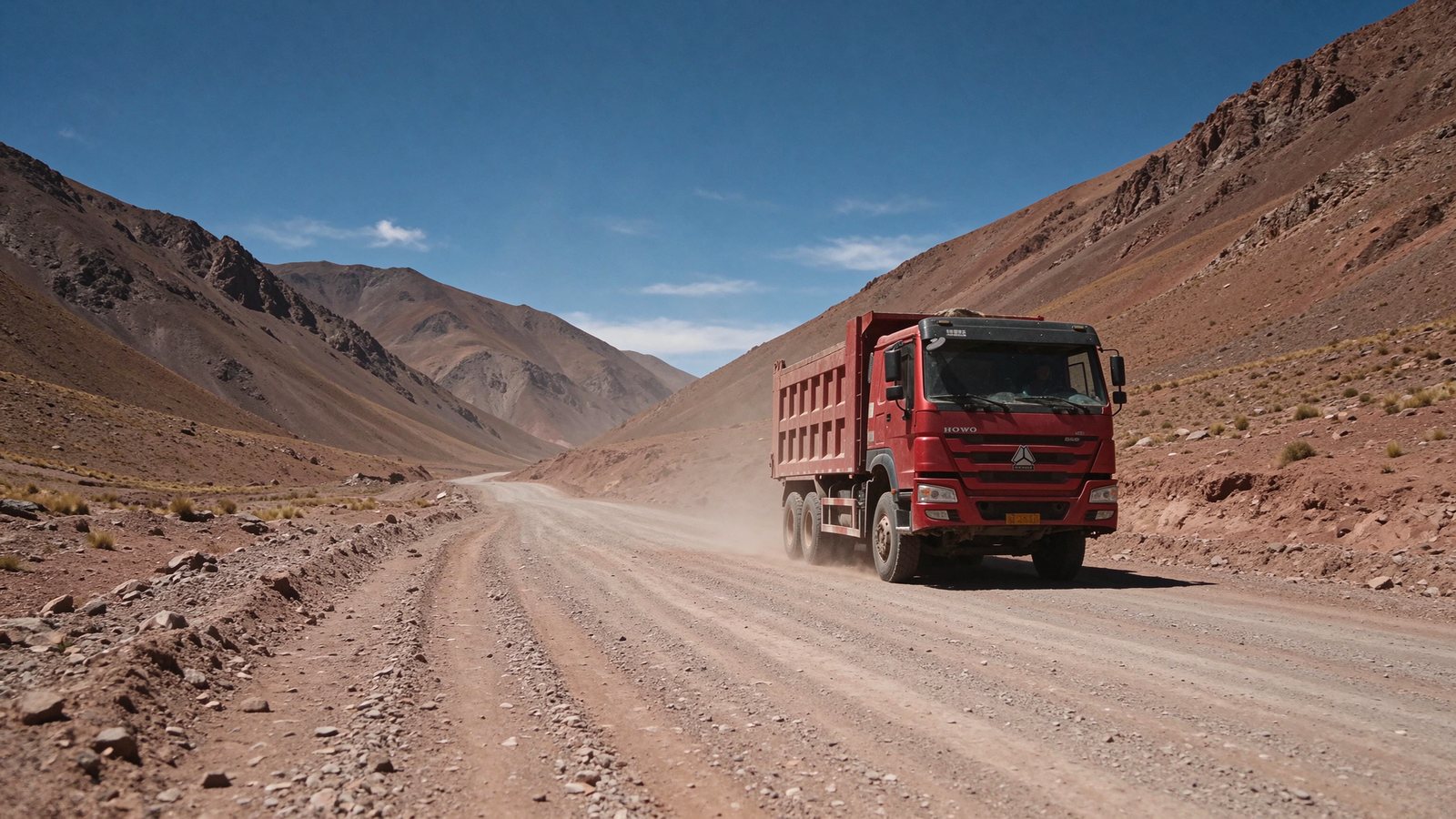
Figure 3 South American Altiplano: gravel roads and continuous climbing above 4,000 m
(2) How altitude affects the truck
As altitude rises, air density falls, intake air is insufficient and combustion is incomplete, so power output drops. Above 4,000 m, the power loss of naturally aspirated engines or engines with poorly matched turbocharging is obvious: slow climbs, frequent gear changes, higher fuel consumption, and real productivity far below the nameplate figures.
At the same time, large day–night temperature swings and strong ultraviolet radiation reduce cooling-system efficiency and accelerate the ageing of rubber parts and seals; long descents combined with a low-oxygen environment concentrate the thermal load on the braking system.
(3) Configuration priorities: high power, high-altitude calibration, strong braking
Power must be selected for high-altitude duty, not settled from sea-level figures. Prefer larger-displacement engines whose turbocharging is optimized for altitude, and confirm that the manufacturer can supply high-altitude power-compensation calibration.
Cooling must keep margin. Specify a larger radiator and intercooler, and check fan and air-guide structure for low-pressure altitude conditions; otherwise the engine is prone to overheating on sustained climbs.
Braking must be fully specified. Engine braking or a hydraulic retarder is essential on long descents—service brakes must not be expected to absorb the load—and brake dimensions and cooling should be reinforced accordingly.
The chassis must cope with bad roads: thicker leaf springs, higher ground clearance, verified approach and departure angles, and cut-resistant mining-pattern tyres to prevent stone punctures and underbody contact.
For South American high-altitude duty, Sinotruk can supply large-displacement models with altitude-specific power calibration, an enlarged cooling system, engine braking or a hydraulic retarder, and reinforced leaf springs, ground clearance and tyres. The same payload at 4,000 m needs a different power and cooling package, and that has to be settled at the specification stage.
5. Mining and construction sites: the harshest duty common to all three regions
Whether in Africa, the Middle East or South America, the haul roads of open-pit mines are the hardest duty a truck can face: loose gravel and slag underfoot, deep ruts, loaded climbs alternating with loaded descents, high dust concentration, and a real risk of tyres being cut by sharp stones.
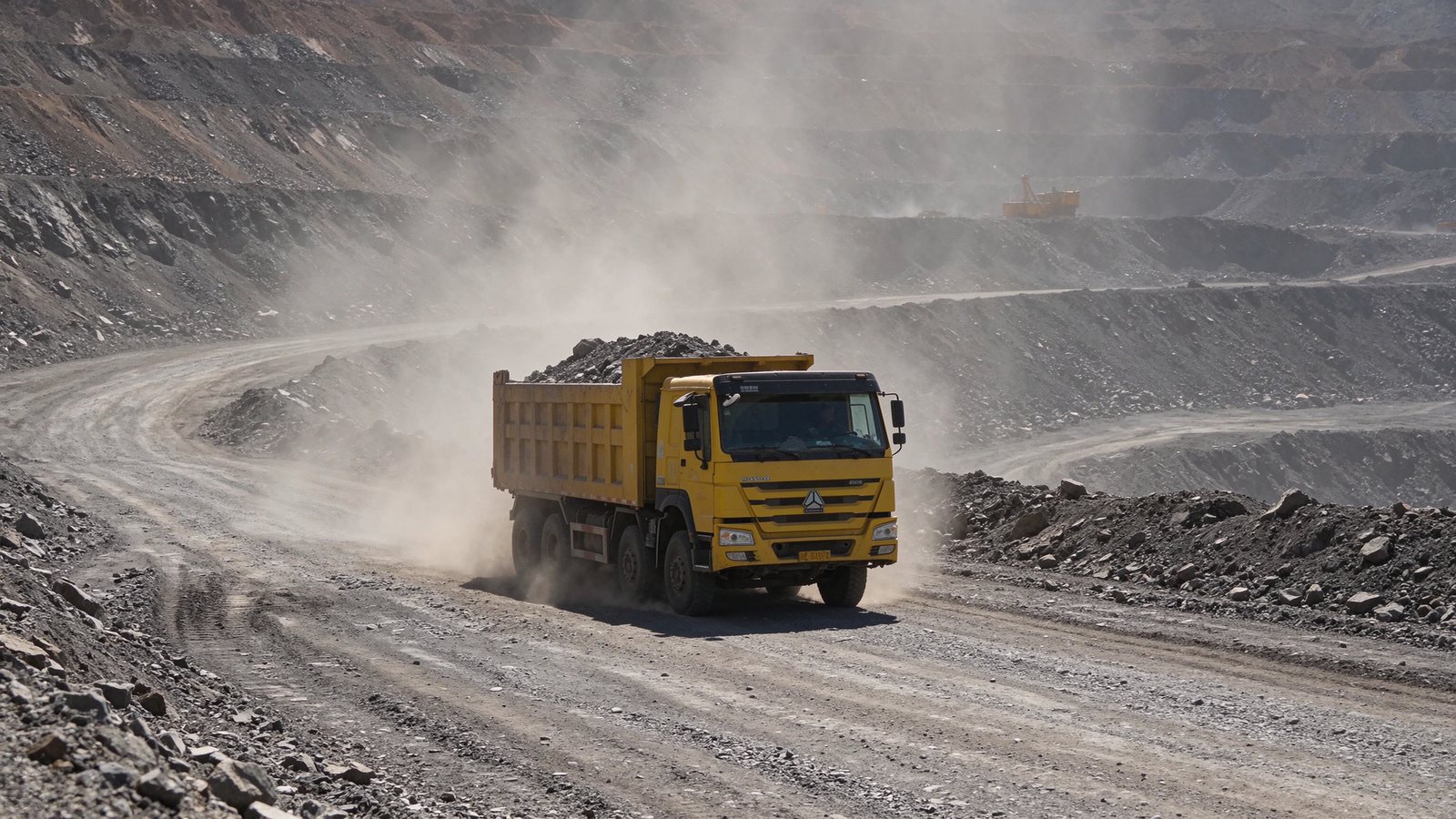
Figure 4 Open-pit mine haul road: loose gravel, loaded cycles and heavy dust
The configuration logic is the same everywhere: a U-shaped body with a high-strength or wear-resistant steel floor; frame and axles with margin above rated load for impact loads; larger air filtration with a well-sealed intake; cut-resistant tread patterns with guards considered; and a braking system verified against the thermal load of loaded descents. Only the strictness of the parameter values differs—Africa emphasizes wear resistance and overload margin, the Middle East emphasizes cooling, and South America must also cover high-altitude power.
Mining-spec models can be further reinforced: U-shaped wear-resistant body, reinforced axles and wheel ends, cut-resistant tyres, larger air filter with two-stage filtration. These items look like added cost, but in reality they buy uptime—on a mine, the loss from one unplanned stop usually far exceeds the price difference of these options.
6. Market-by-market configuration comparison and pre-export checklist
The analysis above is compressed into one table for direct reference during specification.
Table 2 Configuration emphasis compared across the three markets
| Configuration item | Africa | Middle East | South America |
|---|---|---|---|
| Power selection | Adequate output, with emphasis on low-speed torque | Motorway cruising efficiency first | High power with high-altitude calibration |
| Cooling system | Cope with heat and humidity; watch fording | Reinforced as priority, with sand screens | Extra margin for low-pressure conditions |
| Frame and leaf springs | Reinforced for overload duty | Standard reinforcement | Reinforced, with higher ground clearance |
| Body | U-shaped with high-strength steel floor | Wear-resistant steel plate, smooth discharge | U-shaped with wear-resistant steel, impact resistant |
| Intake and air filter | Larger capacity, better sealing | Larger capacity, easy to blow clean | Larger capacity, fine-dust protection |
| Braking | Standard reinforcement; check brake performance after fording | Retarder and engine brake | Retarder and engine brake, carefully verified |
| Tyres | Cut-resistant and heat-resistant | High-temperature, high-speed rating | Cut-resistant mining pattern |
| Steering | Confirm LHD or RHD by country | Mainly LHD | LHD |
Beyond configuration, six items must be confirmed one by one before export; missing any one of them can leave the truck unusable or unregistrable on arrival.
Table 3 Six items to confirm before export
| Item | What to confirm | Consequence if missed |
|---|---|---|
| Steering | Whether the destination country is LHD or RHD and whether purpose-built RHD is required | Cannot be registered or needs costly conversion |
| Emissions | Minimum emission stage allowed and certification requirements | Import prohibited or customs clearance refused |
| Regulatory limits | Local rules on gross weight, axle load and overall dimensions | Over limit, cannot go on the road |
| Certification documents | Whether SASO, CE or other third-party certificates are required | Clearance blocked, delivery delayed |
| Fuel and AdBlue | Local sulphur level and AdBlue supply capacity | Aftertreatment faults, torque derating |
| Parts and after-sales | Supply channels for wear parts and local repair capability | Long downtime, low uptime |
Note: national regulations change frequently. The table above is a checklist framework; specific admission conditions are subject to the destination country's official documents or the compliance requirements provided by the customer.
7. Four common mistakes
(1) Shipping domestic specifications directly
The assumptions behind domestic specifications—rated load, temperate climate, LHD, low-sulphur fuel—do not hold in most export markets. Configuration is not an "option"; it is redone for the destination.
(2) Looking only at horsepower and not at cooling
Horsepower determines climbing ability; cooling determines whether the truck can keep climbing. In the hot and high-altitude duty of the Middle East and South America, inadequate cooling derates a high-power engine: the paper figures look good but real efficiency does not follow.
(3) Ignoring purpose-built RHD design
RHD markets must use purpose-built RHD models. Converting an LHD truck to RHD means re-matching the steering gear, pedal layout, instruments and harnesses—high conversion cost, long lead time, and reliability that is hard to guarantee.
(4) Underestimating parts lead time
Parts take weeks to reach site from China. Carrying one set of wear parts—filters, belts, seals, brake hoses—costs little but prevents a whole shipment from being delayed by one small part failure.
8. Why choose Sinotruk
Sinotruk's product range covers the main duty cycles in all three markets, and configuration can be adjusted to the destination. For overseas buyers, choosing Sinotruk in practice means not having to force an unsuitable truck onto a duty cycle.
(1) A product range covering mainstream duty
6×4 and 8×4 dump trucks cover infrastructure construction and mining; tractor units cover long-haul trunking; tankers, sewage suction trucks and lowbed semi-trailers cover specialized transport. Power ratings are available from common duty to heavy-haul duty, and the same platform can be adapted for RHD, emission stage and body type, so specification does not force a choice between "adequate configuration" and "regulatory compliance."
(2) Mature powertrain and good parts commonality
Sinotruk powertrains have been running in export markets for years: MAN-technology MC11 and MC13 series, Weichai WP10, WP12 and WP13 series, matched to HW19710 and other gearboxes, with single-reduction MCY12 and MCY13 axles or wheel-end reduction HC16 and ST16 axles. The strength of this combination is not the most aggressive numbers but maturity, ease of repair and parts availability. In markets where a part takes weeks, that is worth more than a few extra horsepower.
(3) Purpose-built RHD and multiple emission configurations
RHD markets can be supplied directly with purpose-built RHD models—steering gear, pedals, instruments and harnesses laid out for RHD rather than converted from LHD. On emissions, configurations cover Euro II to Euro VI, selected according to destination regulations and local fuel quality, avoiding the situation where the truck is "compliant but cannot pull."
(4) The real value of a new truck
Many markets habitually buy used trucks, but a new truck should be costed over its whole life cycle. A new vehicle has no hidden faults or accident history, carries a traceable factory warranty, is built to order and can be customized to destination regulations, steering, payload and road conditions; its uptime and residual value are also higher. Over a few years of operation, repair and downtime costs usually offset the purchase-price gap.
(5) After-sales and parts support
Sinotruk genuine parts (Qinren parts) have a complete part-number system and anti-counterfeit markings; parts can be shipped together with the vehicle and wear parts stocked as sets. We can also help customers set up a basic spare-parts inventory and provide technical training, so local technicians get familiar with the model quickly and early failures from incorrect operation and maintenance are reduced.
(6) Export delivery capability
Every step—export certification documents, packing and lashing, ocean booking—affects the delivery lead time. As an authorized first-tier dealer we can prepare compliance documents to the destination country's requirements, support customs clearance and handover on arrival, and continue to provide parts and technical support after the vehicles enter service.
Conclusion
Africa needs durability, the Middle East needs heat resistance, South America needs high-altitude capability. The differences between the three markets ultimately come from different road spectra and climates, not from differences in customer preference. Once that is understood, configuration stops being a matter of ticking boxes and becomes targeted matching—and that is why Sinotruk models have held their ground in these markets: a wide enough product range, with configuration that can be changed to suit each market.
We are an authorized first-tier Sinotruk dealer engaged in complete-vehicle export. Sinotruk models do not win on a single figure but on the ability to adapt as a package: purpose-built RHD, multiple emission stages, reinforced chassis and cooling, and complete parts and after-sales support. If you are evaluating a model for a particular market, send us the destination country, operating scenario, usual payload and road conditions, and we will provide corresponding configuration advice, a specification sheet and a quotation.
This article was prepared by our technical team. Regional market and regulatory information is based on public industry sources and official national announcements; final configuration and admission conditions are subject to the confirmed order and destination-country regulations.