
News
Sinotruk Engine Maintenance Intervals and Oil Filter Replacement Key Points
Trucks delivered in the same batch, running in the same fleet for two years, often end up in very different condition. The difference is usually not how good the engine is, but whether the maintenance schedule has actually been followed: is the oil grade right, has the drain interval been shortened for the duty cycle, and was the filter changed at the same time as the oil.
Many overseas users are used to remembering maintenance as “how many kilometres between oil changes”, but in Africa, the Middle East and South Asia road conditions, dust, fuel sulphur content and the degree of overloading vary so widely that the correct interval for the same engine can differ by more than three times. Following Sinotruk’s official maintenance recommendations, this article sets out the areas where mistakes are most common — daily checks, drain intervals, oil selection and oil filter replacement — so that fleet managers and drivers can use it directly as a reference.
1. The maintenance interval is not a fixed mileage
In Sinotruk’s maintenance specifications, the drain interval is never a single number; it is determined by three variables together.
(1) Three variables
The first is the oil quality grade. For the same engine, the permitted drain mileage differs greatly between CF-4 oil and CH-4 or CI-4 oil. The higher the grade, the better the resistance to high-temperature oxidation and shearing and the better the ability to hold alkalinity, so the longer the oil will last. Running a low-grade oil on a high-grade interval means the oil is effectively spent for the second half of its life.
The second is fuel quality and the intake environment. High fuel sulphur content speeds up alkalinity depletion and acidification, and in dusty environments more particles drawn in with the intake air end up in the oil. Sinotruk’s maintenance recommendation table states explicitly that drain mileage should be reduced accordingly when fuel quality is below specification.
The third is duty severity. Long-haul at rated load, short-haul municipal work, construction tipper work and mine-site work impose completely different engine loads, stop-start frequencies and average speeds. Sinotruk’s maintenance system classifies vehicles by operating conditions into WGⅠ, WGⅡ and WGⅢ: WGⅠ covers severe climate, high dust, site work, or vehicles running under 20,000 km or 600 hours a year; WGⅢ covers long-haul vehicles running more than 60,000 km a year. For the same maintenance items, the WGⅠ interval is only about one third of the WGⅢ interval.
(2) Mileage or time, whichever comes first
Every Sinotruk maintenance table carries the same sentence: mileage or time, whichever comes first. A truck that covers only 30,000 km a year but whose oil has sat in the crankcase for 14 months still needs the oil changed. Oil does not age only through wear; it also ages through oxidation. The HOWO service manual therefore states separately that the oil must be changed at least once a year even if the mileage has not been reached.
For many African fleets this rule is more realistic than mileage: annual mileage is low, but with year-round heat, short trips and frequent stop-start operation, the time limit is often reached first.
2. Ten minutes of daily checks every shift
However accurate the schedule, unexpected failures still have to be caught by daily checks. Ten minutes walking round a heavy truck before departure will find most of the defects that would otherwise leave it stranded on the road.
(1) Reading the dipstick accurately
There are three prerequisites for reading the dipstick: the truck must be parked on level ground, the engine must have been off for at least 5 minutes, and the dipstick must be wiped clean and pushed fully home before being pulled out. A reading taken just after the engine stops, or with the truck on a slope, is inaccurate and easily misjudged.
The normal level should sit between the upper and lower marks, close to the upper mark but not above it. Overfilling is not a good thing: the crankshaft churns the oil and creates drag, power falls and fuel consumption rises, and in severe cases oil is pushed out through the breather. The difference between the lower and upper marks is usually about 3 litres, which serves as a reference when topping up.
If the level keeps falling with no visible external leak, check whether the engine is burning oil or the turbocharger seals are leaking; do not simply keep topping up.
(2) Oil pressure and coolant temperature
In normal operation a heavy-truck engine runs at an oil pressure of about 0.35–0.55 MPa, and 0.1–0.25 MPa at idle. If the oil pressure warning lamp on the dash comes on, stop and shut down immediately to investigate. Do not carry on with a “let’s run a bit further and see” attitude: a few minutes of low oil pressure is enough to damage the bearing shells.
Check the coolant level only after the engine has cooled; opening the expansion tank cap while hot risks scalding. A sudden drop in level usually means a leak in the cooling system, and the truck should be brought in for inspection rather than repeatedly topped up.
(3) Belts, leaks and the air filter indicator
The fan belt and tensioner are parts with a limited service life. Checking them once a shift for cracks, slip and abnormal noise is far cheaper than waiting for a breakage that stops the truck. Check the engine bay, the sump drain plug and the oil filter housing once a shift for signs of oil seepage.
The air filter restriction indicator is the most easily overlooked item. When the indicator trips, intake restriction is already excessive; ignore it and power falls, fuel consumption rises and, because dusty air is being drawn in, liner wear accelerates. In high-dust conditions the dust cup should be checked and cleaned every shift instead of waiting for the indicator to trip.
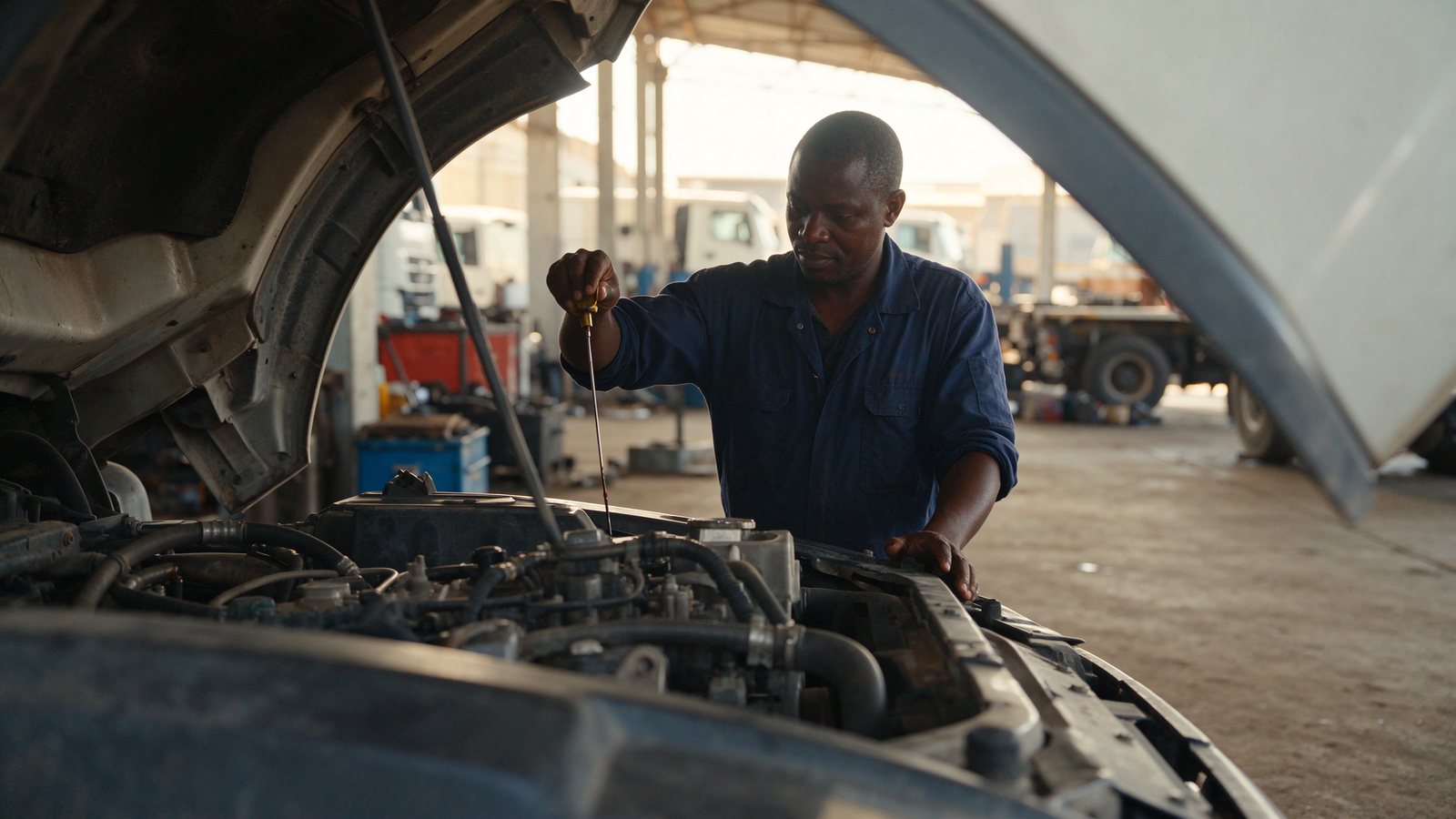
Figure 1 Checking the dipstick every shift: park on level ground, read 5 minutes after shutdown
3. Drain interval reference
The table below draws on Sinotruk maintenance recommendations and the manuals for each model to set out reference intervals for common engines under typical duty cycles. The figures can be used directly to plan fleet maintenance, but the manual supplied with the vehicle and the oil grade actually used remain the final authority.
Table 1 Reference oil drain intervals for common Sinotruk engines
| Engine model and duty | Reference interval | Remarks |
|---|---|---|
| MC13/MC11 China VI, long-haul heavy load | 40,000 km or 12 months | Sinotruk China VI-specific oil |
| MC13/MC11 China VI, medium load | 80,000 km or 12 months | Whichever comes first |
| MC13/MC11 China VI, light load | 100,000 km or 12 months | Whichever comes first |
| MC13/MC11 China VI, express freight | 120,000 km or 12 months | Rated load, motorway operation |
| MC13/MC11 China VI, municipal, urban construction, tipper | 40,000 km (30,000 in severe duty) or 12 months | Frequent stop-start, short trips |
| MC07, tractor units and road haulage | 30,000 km or 9 months | Per the Sinotruk maintenance recommendation table |
| MC07, mine-site and off-road vehicles | 20,000 km or 4 months or 800 hours | Whichever of the three comes first |
| WP10/WP12, severe duty (WGⅠ) | 10,000 km or 200 hours | High dust, site work, short trips |
| WP10/WP12, road duty (WGⅡ) | 30,000 km or 400 hours | Rated-load road haulage |
| All models, absolute minimum | At least once a year | Change even if the mileage has not been reached |
Note: the figures are taken from Sinotruk maintenance recommendations and the operation and maintenance manuals for each model. They differ between emission versions and oil grades; in practice the manual supplied with the vehicle takes precedence.
(1) African conditions must be corrected downwards
The table above is based on standard operating conditions. In most African markets it must be corrected downwards, typically by 30%–50%, for three reasons:
First, fuel sulphur content. Diesel at many local filling stations has a far higher sulphur content than the European standard; the acids formed in combustion rapidly consume the oil’s alkalinity reserve, so the oil may still look clean while it has already lost its neutralizing capacity.
Second, dust. In the dry season, dust concentrations on laterite roads and mine haul roads are very high; both the intake air and the crankcase breather carry dust into the oil, and sludge forms noticeably faster.
Third, overloading and low-speed high-load operation. A truck rated at 30 tonnes carrying 50 tonnes, running for long periods in a low gear at high throttle on gradients and broken roads, keeps the engine at high load and high temperature; oil temperature is high and oxidation fast.
One practical approach: follow the table for the first two years, and at the same time take an oil sample every 5,000–10,000 km for analysis, or use the blotter-spot test to observe the dispersion pattern. When the oil turns visibly black and thick, the boundary of the dispersion ring becomes indistinct, fuel consumption rises, and oil pressure is lower than when the truck was new, change the oil early rather than clinging to the mileage figure.
4. How to choose engine oil
Choosing oil comes down to two things: is the quality grade high enough, and is the viscosity right?
Table 2 Diesel engine oil quality grades and their applications
| API grade | Models and emission stages | Characteristics |
|---|---|---|
| CF-4 | China III and earlier models, older mechanically injected engines | Lowest usable grade, low cost, shorter drain interval |
| CH-4 | China III and China IV models, common on export vehicles | Better detergency and anti-wear performance, the general choice for most duty cycles |
| CI-4 | China IV and China V models, heavy-load and high-temperature duty | Stronger resistance to wear and to high-temperature oxidation |
| CK-4 | China VI models | Low-ash formulation, protects the after-treatment system |
Note: a higher grade may be used in place of a lower grade; a lower grade must never be used in place of a higher grade.
Viscosity is chosen according to ambient temperature. 15W-40 covers roughly -20°C to +40°C and is the most widely applicable choice in most of Africa, the Middle East and South Asia; 10W-40 has better low-temperature behaviour and suits areas with colder winters or high altitude; 20W-50 is thicker and suits year-round high temperature and heavy-load climbing, but it increases internal drag and lubrication takes longer to reach all points on a cold start.
(1) Three red lines not to cross
First, do not mix oils of different brands or different grades. Additive packages differ, and mixing can cause flocculation or precipitation, leaving performance below that of either oil alone. For top-ups use the same brand and the same product.
Second, gas engines must use gas-specific oil. Natural-gas engines run at higher combustion temperature and the oil nitrates faster; diesel engine oil must not be used.
Third, China VI models must not use ordinary high-ash diesel oil. Ash blocks the DPF, and once the after-treatment is blocked the repair cost is far higher than any saving on the oil.
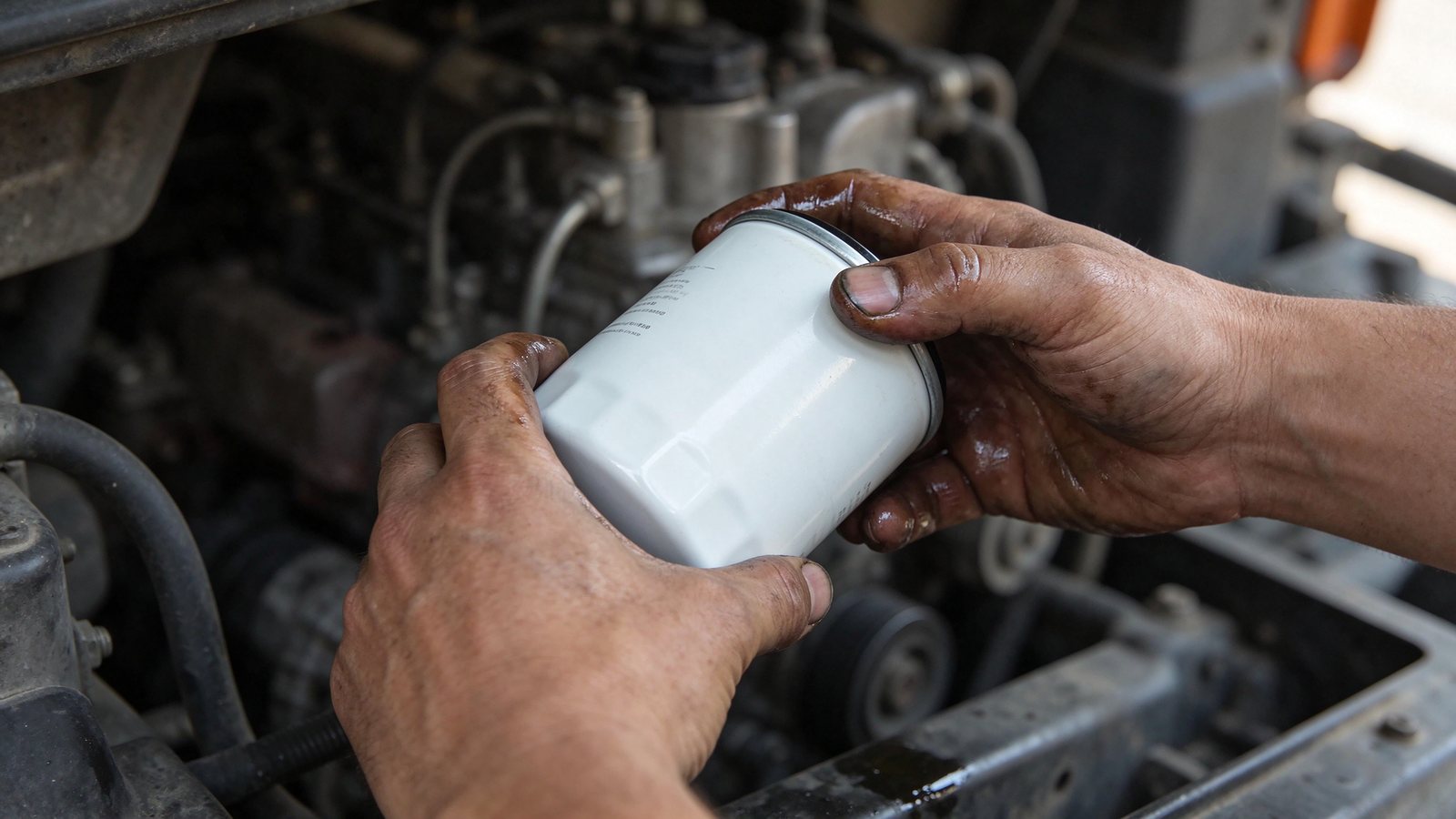
Figure 2 Fill a new filter with clean oil before fitting, and smear oil on the seal
5. Seven key points for oil filter replacement
This is the section of the article to follow step by step. One sentence recurs throughout Sinotruk maintenance literature: the oil filter must be changed at the same time as the oil. Changing the oil without the filter means the metal particles, sludge and dirt held in the old filter are soaked in the new oil, and the new oil’s performance soon drops back to where it started.
(1) Drain hot, drain fully
Before draining, run the engine up to normal operating temperature; hot oil flows better and carries the contaminants out of the sump. Park the truck level, shut down, place the drain container, remove the sump drain plug and let the old oil drain out naturally. Do not force it out with compressed air.
The bonded sealing washer on the drain plug is a single-use item and must be replaced every time. Refit and tighten to the torque given in the manual, around 80 N·m on common models; too little torque causes seepage, too much damages the thread and the sump.
(2) Clean the filter housing before fitting
After removing the old filter, check whether the old seal has stuck to the housing. A leftover old seal plus a new seal means two sealing faces pressing against each other, and this is one of the most common causes of leaks with spin-on filters. Wipe the sealing face of the housing clean with a clean cloth; do not use cotton waste that sheds fibres.
(3) Pre-fill the new filter with clean oil
Before fitting, fill the new filter with clean new oil and smear a thin film of oil on the seal. Pre-filling shortens the period of dry friction on first start, and the oil film keeps the seal from being scuffed as it is tightened. This step is standard practice in both Weichai and Sinotruk maintenance manuals.
(4) Turn a further 3/4 to 1 turn after contact
Tighten spin-on filters by hand; do not force them with a filter wrench. The correct method is to screw the filter on until the seal contacts the housing, then, once resistance is felt, turn it a further 3/4 to 1 turn. Too little and it seeps; too much and the seal is squeezed out of shape, which also seeps.
On models with a paper element, tighten the filter cover to the manual torque, commonly 40±10 N·m. This varies considerably between models, so follow the figure marked in the manual supplied with the vehicle.
(5) Idle the engine after filling
Do not drive off straight after filling. Start the engine and idle for 2–3 minutes, listening for noises and watching the instruments; check in particular that oil pressure builds normally and that there is no seepage at the filter housing or the drain plug. If pressure does not come up, or oil seeps at the filter, stop the engine and investigate immediately.
(6) Recheck the level 5 minutes after shutdown
After idling, shut down and wait 5 minutes for the oil to drain back, then read the dipstick again and top up to the upper mark. The fill quantity for a first fill differs from the quantity when the filter is not changed, and it varies considerably between Sinotruk models: some models take 42 litres on a first fill and 40 litres without a filter change, others 27.5 litres and 26 litres. Confirm against the manual and the dipstick markings for your own model.
(7) Record mileage, hours and filter part number
Write the date, mileage or operating hours, fill quantity, oil brand and grade, filter part number and the person who did the work in the maintenance log. This looks like the least useful item but it is in practice the most useful thing in fleet management: when a fault appears, you can tell immediately whether the last service was done to specification and whether the wrong filter was fitted.
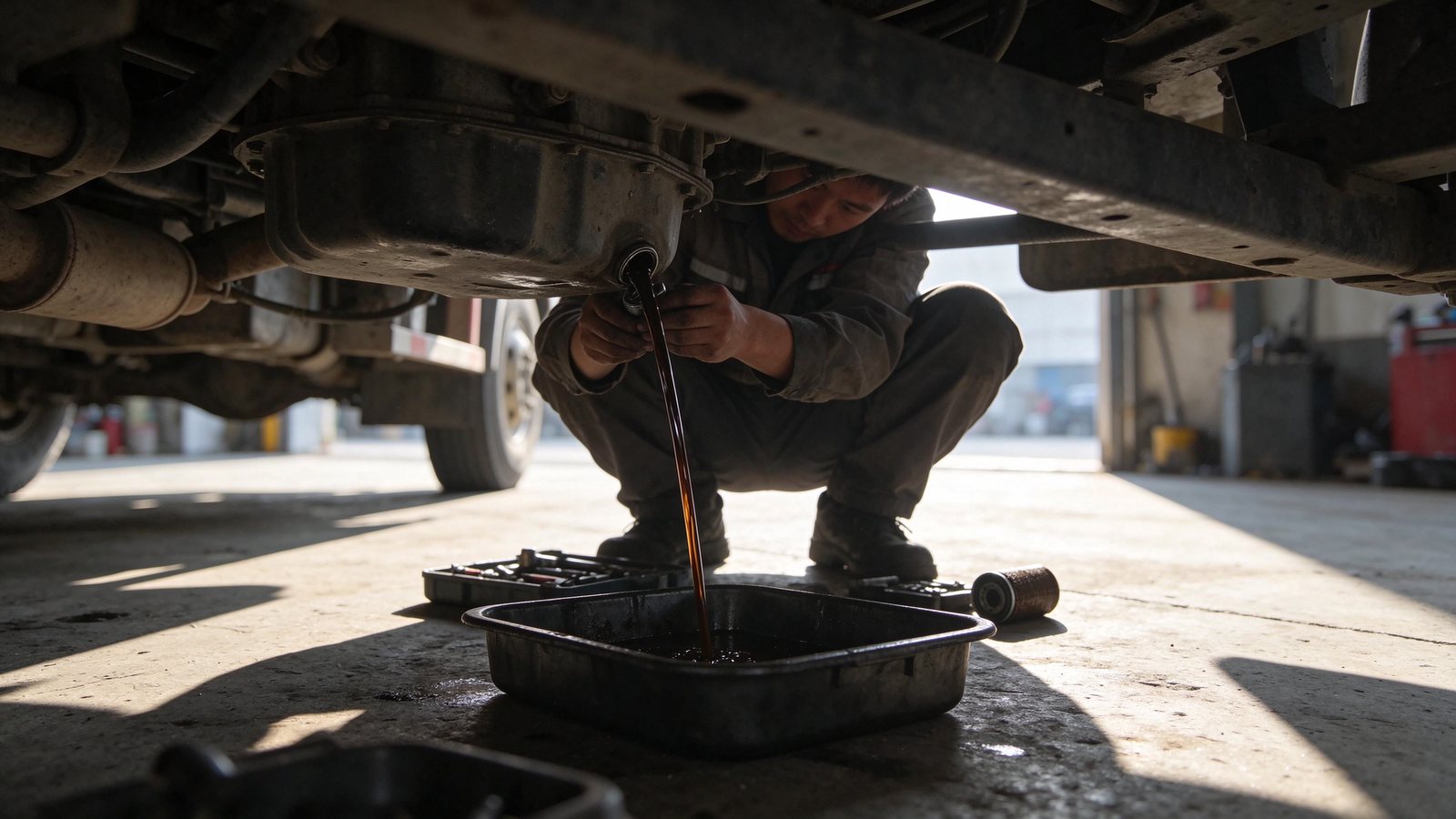
Figure 3 Drain while hot, fit a new sealing washer and tighten the plug to the specified torque
6. The rhythm of the three filters and related fluids
Engine maintenance is not only oil and oil filter. If any one of the three lines — fuel, intake air and cooling — fails, it cancels out the work done on the oil side.
Table 3 Reference intervals for the three filters and related fluids
| Item | Reference interval | Key point |
|---|---|---|
| Oil filter | At every oil change | Must be changed together with the oil |
| Fuel pre-filter (water separator) | Drain water daily, replace every 10,000 km | Water is the number one killer of high-pressure pumps |
| Fuel fine filter | 10,000–20,000 km | Never more than 20,000 km |
| High-pressure filter | Element every 10,000 km, drain sediment every 2,000 km | For electronically controlled common-rail models |
| Air filter main element | Per the restriction indicator; every shift in high dust | Blow from the inside out; pressure must not be too high |
| Air filter safety element | Replace after the main element has been cleaned 5 times | Do not keep reusing after repeated cleaning |
| Coolant | 2 years, or by freezing point and corrosion-inhibitor test | Approved coolant only; never untreated water |
| Valve clearance | Inspect and adjust at the scheduled service level | Checked at first- and second-level service and above |
Note: intervals vary with duty cycle and oil grade; they should be shortened accordingly in high-dust or high-sulphur-fuel conditions.
Fuel deserves separate emphasis. Diesel in many African markets carries high water content and contamination. If the water separator is not drained for a long time, water reaches the high-pressure pump and the plungers and injectors wear out in a very short time; the repair bill is typically the price of dozens of filters. Opening the drain valve and draining once a day before departure is the cheapest maintenance there is.
Cleaning the air filter is also often done wrongly. The correct method is to blow from the inside of the element outwards, driving the accumulated dust out; blowing from outside inwards forces dust into the filter paper fibres, and both restriction and dust penetration get worse after refitting. Pressure must not be too high — a torn element is scrap. When the main element has been cleaned five times, the safety element should be replaced as well.
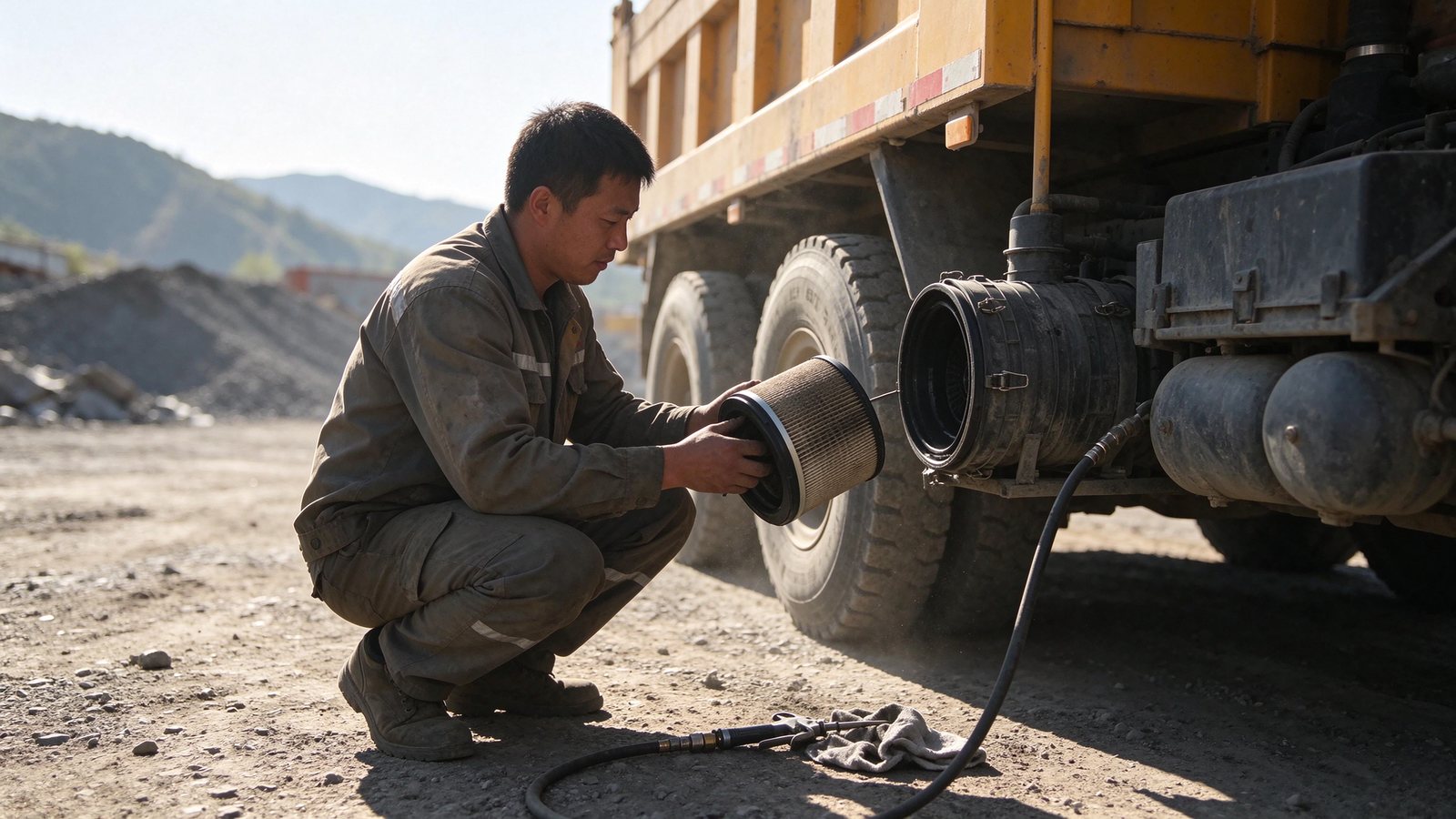
Figure 4 In high dust, clean the air filter according to the indicator; do not wait for the warning
7. Five common practices in the African market and what they cost
In the course of working with overseas fleets, several practices come up again and again. They look like savings, but they push the cost further down the road.
(1) Using the cheapest oil
Cheap oil is mostly low-grade base stock with ordinary additives; it oxidizes quickly at high temperature, alkalinity drops fast and detergency and dispersancy are inadequate. Nothing shows in the short term, but after a year or two fuel consumption rises, crankcase sludge increases and liner and piston-ring wear accelerates. Oil accounts for a very small share of the cost of running a truck; the saving here is usually paid for in an engine overhaul.
(2) Changing the oil without the filter
This is the most widespread and the most damaging practice. A filter has a limited dirt-holding capacity; once it is used beyond its life the bypass valve opens and unfiltered oil goes straight into the main oil gallery, circulating wear particles into the bearings. Change the oil without the filter and the cleanliness of the new oil is back to where it was within a few dozen kilometres.
(3) Blowing the air filter out and refitting it
Filter paper is a single-use filter medium. Repeated blowing opens up the gaps between fibres and lowers filtration efficiency, and the cleaning process itself easily damages the paper. A damaged air filter is barely better than no air filter at all: dust goes straight into the cylinders and liner wear rates multiply.
(4) Waiting for a warning before servicing
Oil pressure, coolant temperature and air filter restriction warnings all indicate that a fault has already occurred; they are not service reminders. Come in only when the warning appears and the job is usually a set of bearings, a cylinder head or a turbocharger, not a can of oil.
(5) Topping up with a different brand of oil
On a long trip the oil level drops and a can of another brand is bought locally to top up; this is very common. Mixing different formulations can produce precipitation and can deactivate anti-wear additives. After an emergency top-up, the oil should be changed completely as soon as the destination is reached.
8. Conclusion
There is no secret to engine maintenance, only execution. Choose the right oil grade, shorten the interval for the duty cycle, change the filter when you change the oil, and spend ten minutes on checks every shift: do these four things and a Sinotruk engine will comfortably reach its design life under Africa’s heat, dust and overloading. Fail to do them and even the best machine will be in the overhaul shop early.
We are an authorized first-tier Sinotruk dealer based in Jinan, long engaged in the export of Sinotruk complete vehicles and parts. We supply HOWO, SITRAK and other series, together with genuine oil, oil filters, fuel filters, air filters and other maintenance parts, and provide left- or right-hand drive and the appropriate emission level for the target market, with maintenance documentation in English. If you are drawing up a maintenance plan for your fleet, or need a maintenance parts list and quotation for a specific model, please contact us: we can produce an executable maintenance plan based on model, duty cycle and annual mileage.
The technical parameters in this article are based on Sinotruk official maintenance recommendations and the operation and maintenance manuals for each model. Specific maintenance intervals and oil specifications are subject to the manual supplied with the vehicle and to the confirmed order configuration.