
News
HOWO Tractor Truck Configuration Guide: Engine, Gearbox, Axle and Final Ratio
Many customers start by asking “How much?” when buying a HOWO tractor, but what really determines drivability, fuel efficiency and suitability is how four major components are matched: engine, gearbox, drive axle and final ratio. A good match turns the new truck into a profit tool; a bad one leads to high fuel consumption or poor power—and regrets two years later.
As a first-tier Sinotruk dealer, we help customers specify trucks every day. This article explains the logic; save it for reference.
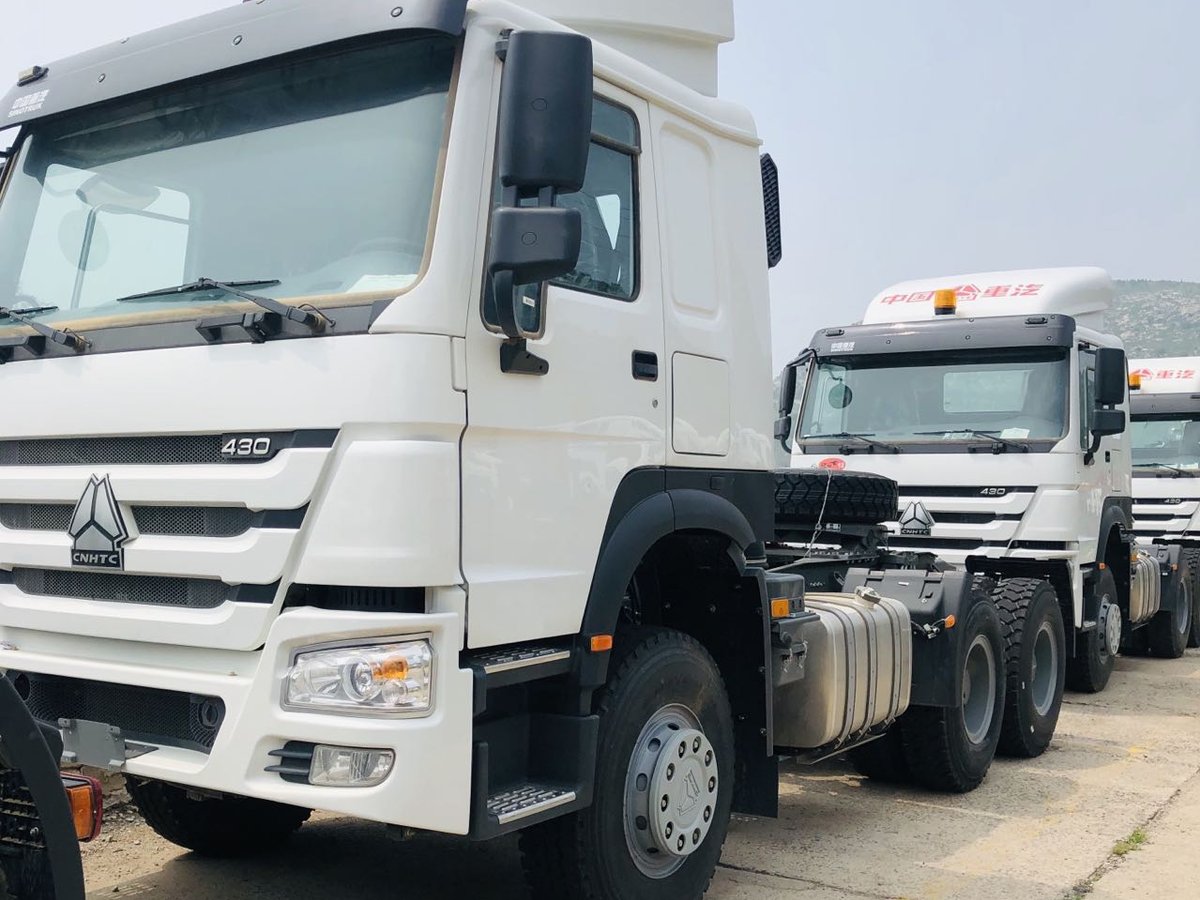
1. Engine: more horsepower is not always better—matching the duty cycle is key
HOWO tractors currently offer three main engine series, classified by displacement and positioning:
| Series | Representative models | Displacement | Power range | Applications |
|---|---|---|---|---|
| MAN-technology MC series | MC11 / MC13 / MC13H | 11L / 13L | 400–570 hp | Long-haul trunk routes, efficient logistics, high reliability |
| Weichai WP series | WP10 / WP12 / WP13 | 10L / 12L / 13L | 340–550 hp | General purpose, easy parts availability, low repair cost |
| Sinotruk D series | D10 / D12 | 10L / 12L | 340–440 hp | Economical, entry-level HOWO T7H/A7 |
Choose an engine by three numbers:
- Horsepower (HP): 400–460 hp is enough for standard-load high-speed container hauling; for heavy loads, frequent climbs or gross weight above 55 t, go for 500 hp or more.
- Maximum torque (N·m): more important than horsepower. A wider torque band (for example, maximum torque available from 900–1400 rpm) gives stronger climbs, fewer shifts and easier driving.
- Economical rpm range: a good engine’s economy range should be around 1000–1400 rpm; at highway speed, keep 1100–1200 rpm for the best fuel economy.
Quick selection:
- Long-haul trunk routes, green-channel and cold-chain transport → MAN-technology MC13 540/570 hp: fuel-efficient and reliable.
- Intra-provincial short haul and general cargo → WP12 430/460 hp: strong value.
- Mining, construction and heavy short haul → high horsepower with a large ratio; do not save money on power.
2. Gearbox: manual or AMT? Are more gears always better?
HOWO tractors are mainly equipped with Sinotruk’s own HW series gearboxes:
| Gearbox model | Gears | Type | Features |
|---|---|---|---|
| HW19710 | 10-speed | Manual | Classic, simple structure, low repair cost |
| HW25712 | 12-speed | Manual | Closer ratios, more economical at highway cruise |
| HW16-WY | 16-speed | Manual / AMT | Standard for high-torque models, smooth climbing shifts |
| 9th-generation integrated AMT | 12/16-speed | AMT automatic | With hydraulic retarder, easy long-haul driving |
Manual or AMT?
- Manual: cheaper, gives the driver direct control and is simple to repair. Suits operations with mixed driver skill levels and complex routes.
- AMT: costs RMB 20,000–30,000 more, but greatly reduces long-haul driver fatigue and gives more consistent fuel consumption because the computer shifts more precisely than a driver. For highway trunk lines and single-driver operation, AMT is strongly recommended.
More gears is not always better; ratio steps matter. A 10-speed is fully adequate for standard loads; a 16-speed suits large-displacement, high-power engines, where close ratios keep the engine in its economical range.
3. Drive axle: single reduction vs hub reduction—what is the difference?
This is the easiest place to make the wrong choice. HOWO tractors use two axle types:
1. Single-reduction axle (MCY12 / MCY13)
- Features: small axle bowl, high ground clearance, light weight, high transmission efficiency.
- Applications: highway transport, standard-load high-speed operation, gross weight up to 49 t.
- Ratio range: 3.08–4.11.
- Fuel economy: 5%–8% better than hub-reduction axles.
2. Hub-reduction axle (HC16 / ST16 / double-reduction axle)
- Features: large axle bowl, high torque, durable, impact resistant.
- Applications: heavy load, construction, mining, off-road, gross weight above 60 t.
- Ratio range: 4.42–5.26 or higher.
- Fuel economy: heavier; less economical at highway speed than a single-reduction axle.
The cost of choosing the wrong axle:
- Hub reduction on highway → tens of thousands of RMB in extra fuel every year.
- Single reduction in a mine → easy axle damage, with repairs costing tens of thousands.
Remember: single reduction for highway standard loads; hub reduction for construction and heavy loads.
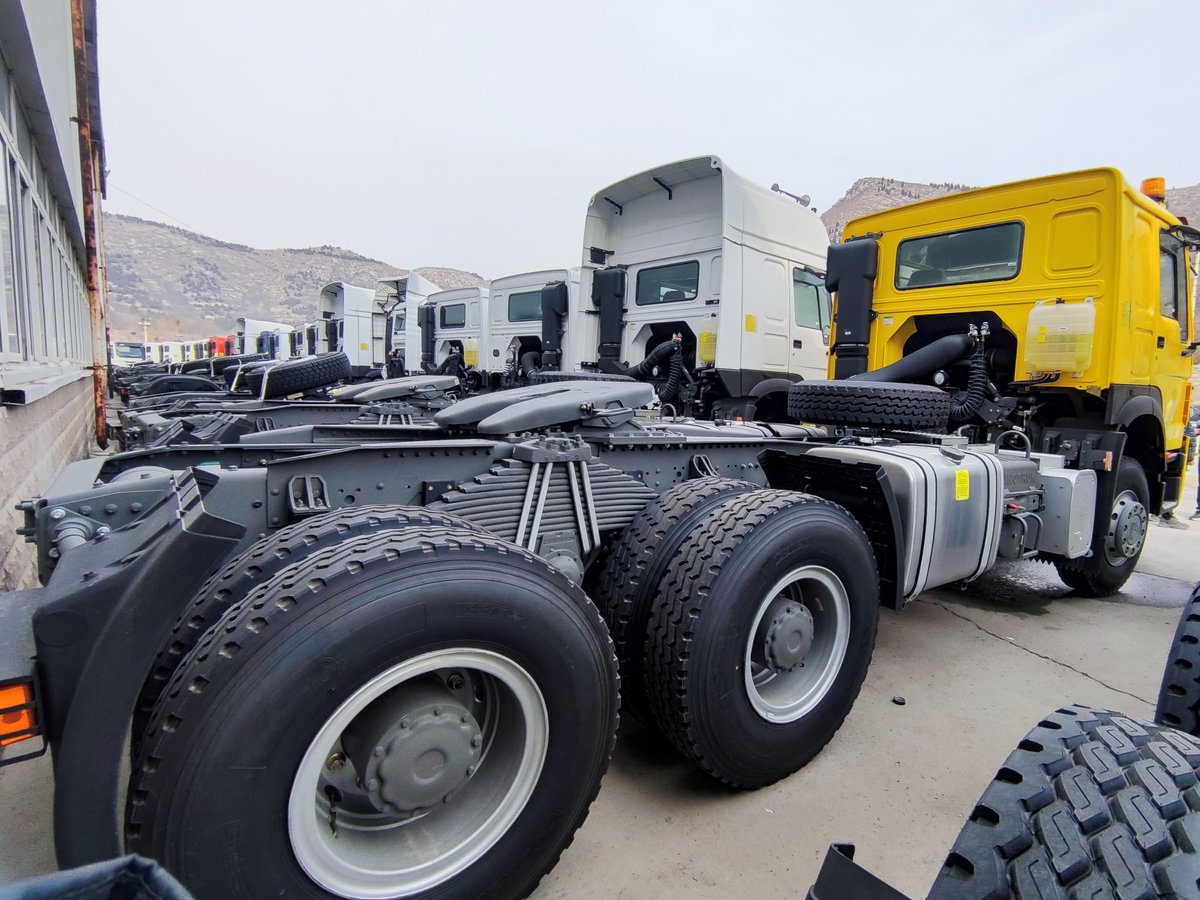
4. Final ratio: the last piece—deciding whether you run fast or haul heavy
Final ratio is “how many turns the wheel makes for each turn of the engine.” A larger ratio gives more torque but lower speed; a smaller ratio gives higher speed but weaker climbing. Common HOWO tractor ratios:
| Ratio range | Matching axle | Economic speed | Applications |
|---|---|---|---|
| 3.08–3.36 | Single reduction MCY13 | 80–90 km/h | Flat highway trunk lines, standard-load express |
| 3.7–3.91 | Single reduction MCY12 | 70–80 km/h | Mixed roads, most common in China |
| 4.11–4.42 | Between single and double reduction | 60–70 km/h | Mountains, hills, standard load plus occasional heavy load |
| 4.8–5.26 | Hub reduction HC16 | 50–60 km/h | Mining, construction, heavy short haul |
How to calculate the right ratio? A simple formula:
Economic speed = engine economic rpm × tire circumference × 60 ÷ (gearbox overdrive ratio × final drive ratio)
Example: MC13 engine economic rpm 1200, 12R22.5 tire circumference about 3.17 m, gearbox overdrive 0.83, ratio 3.7:
Economic speed ≈ 1200 × 3.17 × 60 ÷ (0.83 × 3.7) ≈ 74 km/h
If you run on highways limited to 80–90 km/h all year, a 3.7 ratio is just right; for mountain roads limited to 60 km/h, 4.42 is more suitable.
Final notes
When buying a tractor, choose the best match for your duty cycle, not the most expensive truck. With the same engine, a 3.36 ratio and a 4.8 ratio can differ by tens of thousands of RMB in annual fuel cost.
We are an authorized first-tier Sinotruk dealer with HOWO tractors regularly available from stock and export customization support. If you are unsure what to specify for your route, send us your regular route, cargo, gross weight and daily mileage, and we will provide a configuration proposal free of charge.
This article was prepared by our technical department with reference to Sinotruk official data. Actual vehicle specifications are subject to the final order.